
BERGISCHE ROHSTOFFSCHMIEDE – RAUMWIRKUNG
GOAL
The goal of the “Bergische Rohstoffschmiede” project is to develop the Bergisch Rhineland into a real-world laboratory for circular value creation. In the future, waste materials are to be viewed as resources and integrated into regional value creation processes in order to conserve raw materials, energy, and reduce CO₂ emissions. In doing so, the project provides a key impetus for the regional resource transition and strengthens the shift toward a sustainable economic structure.
A total of nine subprojects by researchers at TH Köln in the field of the circular economy are being funded. They address key challenges of the circular economy—ranging from material innovations and logistics and transformation processes to spatial issues.
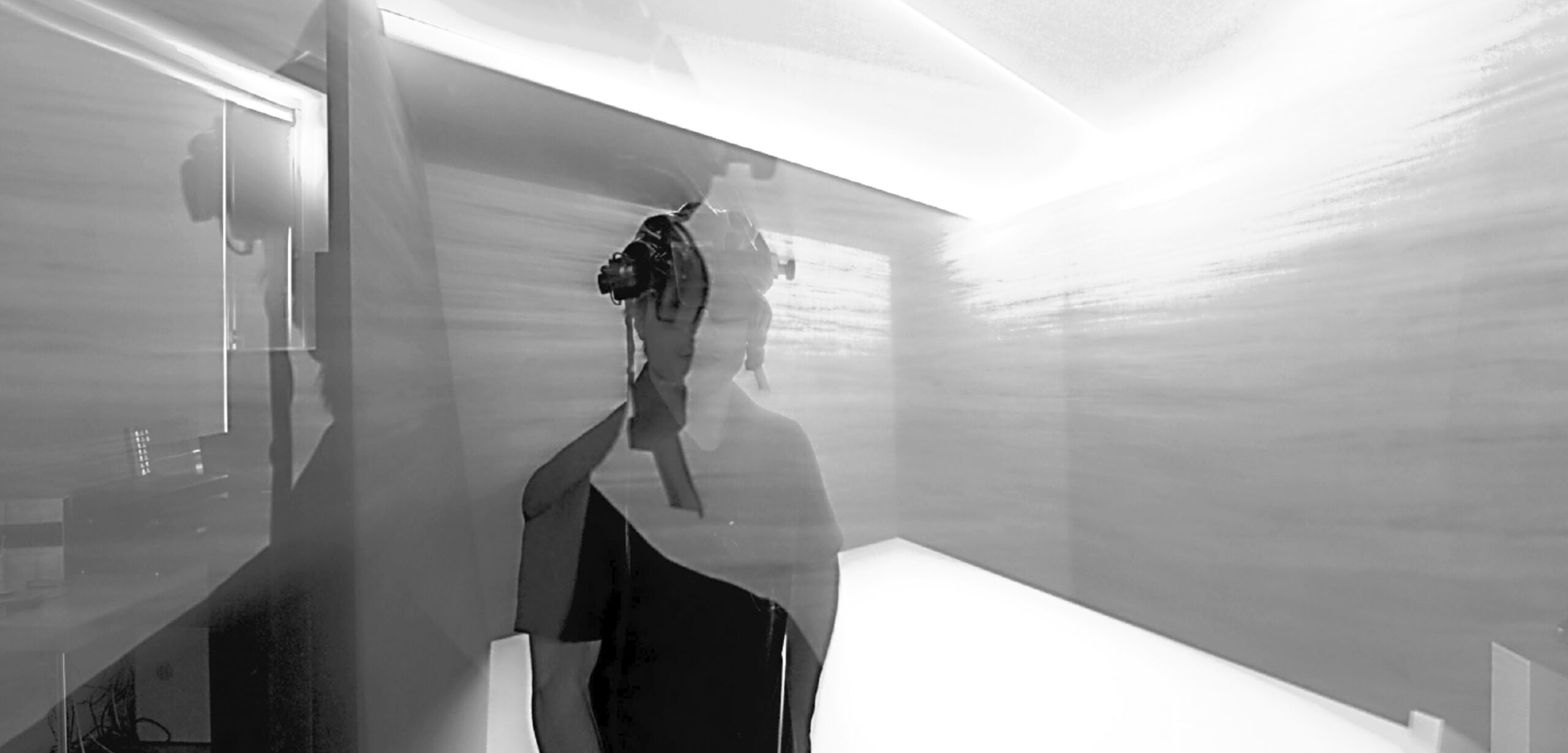
The research project “Raumwirkung” (spatial impact), developed under the direction of Prof. Marco Hemmerling, focuses on how people perceive spaces and combines scientific findings with practical experience from architectural design to develop user-oriented design strategies. Rather than adopting a purely philosophical-anthropological perspective on spatial atmosphere, the research project uses quantifiable methods, qualitative analyses, and empirical studies to investigate the impact of architecture committed to circularity on people.
BACKGROUND
The reuse of building materials and components offers significant potential across all three pillars of sustainability—ecology, economy, and sociology. To holistically understand social innovations for sustainable development in the field of building component reuse, it is necessary to examine not only their content and processes but also the enabling and inhibiting factors of the socio-material context in which they operate. In practice, the implementation of construction projects using reused elements fails primarily due to the internal attitudes of the actors involved in the construction process as well as the building users, since building components that have already been used are often still automatically associated with lower quality.
OBJECTIVES
The objective is to investigate the impact of space on people in the context of resource-efficient and circular construction. Atmosphere—defined as the effect of the built environment on people—is omnipresent, obvious, and yet a diffuse phenomenon. How do users of a space experience their immediate surroundings? What character and specific qualities does a building possess, and do the spaces within it share these traits? Moving beyond a purely philosophical-anthropological perspective on spatial atmosphere, this research project uses quantifiable methods, qualitative analyses, and empirical studies to investigate the impact of architecture committed to circularity on people.
METHODOLOGY
Using well-being studies, biometric data from users is collected and processed in real time to objectively determine the impact of sustainable and circular architecture, as well as reused elements (e.g., windows, doors, floor, ceiling, and wall elements, as well as interior surfaces and space-defining fixtures/furniture), on people. The spatial impact is determined and documented using biofeedback systems (e.g., physiological parameters such as blood pressure, pulse, respiratory rate, muscle tension, body temperature, and skin moisture), questionnaires, video analysis, and eye-tracking methods, as well as light and colour measurements.
RESEARCHERS:
Prof. Marco Hemmerling
Ricarda Weßeling Dijana Taseva
PROJECT DURATION
October 2025-October 2028
FUNDING BODY Europäische Union Europäischer Fonds für regionale Entwicklung (EFRE)